Showing posts with label tsunami. Show all posts

Tuesday, April 1, 2014

Chile's Thrust Fault- 8.2 Magnitude Earthquake

Hello Bloggers,

I sadly report that an 8.2 magnitude earthquake has struck the coast of Chile, prompting evacuations and tsunami warnings.  At 5:04pm Pacific Standard Time, a quake from the San Ramon thrust fault line resulted in at least one initial small tsunami of about 6 feet.

This fault line, which is a thrust fault line much like the one that caused the 2011 Tohoku tsunamis, is quite active and has caused a range of quakes from mild to severe in the last few decades.

A tsunami alert has been issued for Chile, Ecuador and Peru, and all coastal areas are being evacuated as best as possible. 

More soon.  For information on thrust faults and other fault lines, visit these blog posts:
http://www.oregonbeachcomber.com/2012/09/historic-events-will-history-repeat.html
http://www.oregonbeachcomber.com/2013/01/false-warning-and-dock-clean-up.html

A thrust faultline forces a wall of water upwards and towards shore. Sciencythoughts.blogspot.com

Monday, November 4, 2013

How far out at sea should you be to survive a tsunami?

Can you 'ride out' a tsunami?

We've all heard the stories: a fisherman rides out a tsunami far out at sea, then returns to land to find his home port devastated without his knowledge.  But is this possible? The answer is actually quite surprising... and possibly life-saving.

Tsunami waves are really unique things.  The scale of them far exceeds normal wind waves, and the physics of them is completely different than those very long-wavelength tidal waves that drive the rise and fall of tides around the world. 

Tidal waves and tsunamis are completely different things, even though the terms are sometimes confused!


Tidal waves (i.e. tides) vs. tsunami wave [Graphic: Geomika.com blog]
Looking at the image above, you can see that in the open ocean, the wavelength of a tidal wave (That is, the distance from peak to peak) is extremely long: 15,000 km or ~9,320 miles. Also, the period of these waves is 12 hours (or 6 hours between peaks for some areas); meaning that it takes 12 hours for that high or low tide to reach shore.  

Tsunamis are completely different waves.  Instead of a steady displacement of water, by the time tsunamis reach shore they are a churning mass of water (think of a giant breaker on the beach) that move with a wavelength of 400 km or 248 miles, meaning they can reach speeds of 248 miles per hr; this is why they often reach shore with little warning after an earthquake.  

Additionally, the very long wavelength of  tsunami prevents it from acting like a normal deep-water wave- instead they behave as if they are in shallow water, and are therefore called shallow water waves.  In order for a wave to be considered a 'shallow water wave' they must be traveling in water less than 1/20 of the wavelength.  No problem if your wavelength is nearly 250 miles; the deepest point in the ocean is less than 7 miles; a tsunami would need a depth of 12.5 miles to be considered deep water.

 So how do you know how long it will take a tsunami will take to reach land? That is completely dependent on the depth of the water it is in; the shallower the depth, the slower the wave moves.

Wave speed can be determined by:

Speed (m/s)  =  3.13 √ Depth

So at a depth of 200 meters, a tsunami would travel at about 45 m/s, or more than 100 miles per hour!

Knowing how far out to sea a fault line is can help experts estimate evacuation times before a tsunami hits land.

Tsunamis at sea

Now that we know a little about how tsunamis function inland, what about out at sea?

Out on the open ocean, tsunami waves  move much faster: 

Speed (m/s)  =  3.13 √ Depth

Assuming the ocean floor is at 4,000 meters, a tsunami wave would be traveling at a breakneck 197.6 meters per second; or 442 miles per hour!

But what else is unique about tsunami waves is that they have a very small wave height in deep water, passing by quite un-noticably.  However, when a wave approaches shore and begins to 'feel' the bottom, it slows down- and that energy has to go somewhere.  As a result, wave height builds very quickly when the wave approaches the continental shelf.  

A tsunami in the deep ocean is barely noticeable, even with a breakneck speed. [Graphic: EnchantedLearning]

What was a wave of only a few meters quickly rises to tens of meters. 

So here is the million dollar question: how far out to sea would you want to be if a tsunami hit?  The answer is: it depends on where the continental shelf is. 

Because the ocean floor rises quickly at the continental slope and shelf, wave height builds just as quickly.  

To survive a tsunami at sea, you would want to be past the continental shelf.

For a place such as Oregon, this means you should be at a depth of 50 fathoms (a fathom is 6 feet) or 300 feet.  This means you will be will past the continental shelf.  Depending where you are, this could be anywhere from 14 to 20 miles (12-17 nm) from shore. 
 
A general idea of the distance from shore the US continental shelf extends (1 nautical mile = 1.15 miles).  Of course, this varies greatly depending on local bathymetry. [Image: State.gov]


So really, if you are already a ways out to sea, this might really be your best (and safest) bet.  However, if you are close inshore, get to land quickly and above the tsunami zone.  You may have as little as a few minutes to get to safety!  

To learn more about different types of waves, visit East Carolina University's great geology page on the matter.

Friday, October 25, 2013

Fukushima issued with small tsunami alert

The USGS has just reported that a 7.1 magnitude earthquake off the coast of Fukushima (at about 10 km depth).  The quake has resulted in the administration of a tsunami warning; this time much smaller than the version that struck the coast in 2011.  Today's earthquake was a normal slip-strike quake rather than the devastating megathrust variety, resulting in a much smaller (3.0 feet) lifting of the oceans being predicted.

However, these small tsunami effects can still be dangerous for those in low-lying coastal areas; a bystander was swept out to sea in 2011 in Crescent City, California when he and his friends went down to photograph the incoming waves from the Japan earthquake.

Remember, if you are in the zone of a tsunami warning- no matter how small- stay to higher ground and resist the urge to watch from unsafe locations.

To keep up on recent earthquakes, visit the USGS's Earthquakes Page- you might be surprised how common they are!

Wednesday, October 16, 2013

Duck and Cover- The Great Shakeout!

Tomorrow, October 17, you may be slightly confused when your coworkers climb under their desks at approximately 10:17am.  No, it's not because Congress is in the process of actually making a decision- it's the Great Shakeout!  

The Great Shakeout is designed to help people prepare for the possibility of an earthquake- and ensuing natural disaster in their area.  Both individuals and organizations can sign up for the Shakeout- and if you live in a tsunami-prone area, there will likely be a tsunami drill; like that at my workplace- the Hatfield Marine Science Center, Newport OR.

Drop and Cover!
If you or your organization wants to participate, you can still register at the Shakeout's webpage- there is probably one in your area! Additionally, your organization or community may have further information as to a tsunami drill, and what you should do.

You can never be too prepared in the case of a natural disaster- check out my Tsunami and Disaster Preparedness page for more information and links for disaster preparedness.  Practicing in the best-case scenario can prepare you for the worst.


Wednesday, August 7, 2013

Tsunami Evacuation Map App Now Available

New Free Tsunami Evacuation App

Greetings marine bloggers and ocean enthusiasts!


For those of you who live in coastal areas, a new App is available for both Droid and iPhone called TsunamiEvac-NW.  This very helpful App was developed by NANOOS utilizing tsunami maps (which have been recently updated, by the way) created by the Department of Geology and Mineral Resources (DOGAMI).

This is a much needed app, which retains almost all of the original features of the computer-based evacuation maps, including the ability to 'search' an address (your home, school, place of work, etc) to determine whether or not it falls in the tsunami danger zone, and where the nearest route of evacuation may be. 

Download is free, and there is no better time to become well-informed in preparedness then now!

To download the App, search 'TsunamiEvac-NW' or visit the link: http://www.nascio.org/Apps/details.cfm?id=227


(c)  NASCIO, Oregon DOGAMI


Monday, July 8, 2013

New ways to survive a tsunami

I recently went to the store to purchase a week's worth of emergency supplies for me and my pets in case of a tsunami, power outage, or other natural disaster that might leave my coastal dwelling 'off the grid' for a while.  I was surprised when, upon inquiring about my purchases, the cashier giggled rather derisively when I explained what they were for.

Assuring myself that the $30 I just spent would be priceless in the case of a disaster, I began to wonder whether others have made 'snicker-worthy' choices in disaster management- certainly more than me!  It was this question that led me down the weird path of tsunami survival capsules- these inventions have seen a surge in recent years, and there is no shortage of models.

So read on- there is more than one way to survive a tsunami.  However, I might advocate that the best preparation is instead having at least a week's worth (some say 3) of emergency supplies, medications, and food, as well as a first aid kit and tent or other shelter.  If you live within the tsunami zone, consider asking friends outside of it (and nearby) if you can stash your items there. Choosing a central rendezvous point with loved ones and friends is always advised as well.

Check out my RESOURCES page for more information, or this page with information on building a disaster survival kit.

However, if you are feeling adventurous, you might also want to consider purchasing one of these 5 interesting modes of tsunami survival... I do have to ask though- what if you are swept away in it?

5) Mukilteo Survival Capsule
This capsule is designed to be sturdy enough to protect you from the tsunami and ensuing debris. This temporary shelter also comes with music, lights, air tanks, GPS and a toilet.  My question is- how do you stay upright?
http://tribkcpq.files.wordpress.com/2013/06/survival.jpeg
Survival Capsule

4) Rescue Pod
This bright orange beauty is durable, buoyant, and comes complete with a Coast Guard-friendly steel hook so you can be later towed to safety.  This pod includes a race car-type seat, and room to store supplies.  Lastly, a small window lets in natural light.  This pod has fewer 'options' than the Mukilteo brand, but is also more ruggedly designed.
hslider2
ResQ Pod Afloat and highly visible
3) Havana Houseboat Survival Pod
This spacious version of a survival pod was privately designed and created by a houseboat builder, Matt Duncan. This rugged capsule features lots of space as well as 'viewing windows' for those who might get claustrophobic- functional, but quite a bit smaller than the ResQ pod. Good news though- the capsule features enough air capacity for 2.5 hours- a bit scary if you ask me! Other features: a helicopter hook, inward opening hatches, and child restraints.


2) Survival Capsule
British inventor, Julian Sharp of the Mukilteo Survival Capsule, doesn't believe in doing things halfway.  After creating his tsunami pod, he planned to test its durability by flinging it over Niagara Falls- complete with him in it. Strangely, I have seen no such evidence that this has actually happened.
This beauty will set you back as much as $9,000. All in all, not something I would voluntarily choose to go over Niagara Falls in.
 
1) Noah's Ark Mayan Apocalypse Pods
If the other four options aren't extreme enough, Noah's Ark Mayan Apocalypse Pods (Is that a mouthful of apocalyptic references or what?) are the ultimate in survival.  Rather than just being designed to survive a possible tsunami, these pods are made to withstand natural disaster and possibly the end of the world. The pods have features including: Oxygen tanks, food and water stores, and seat belts. Oh, and floral wallpaper. It is designed to prepare you (in style) for up to four months of survival, for 14 people.  The designer, Liu Qiyuan, says you could also support up to 30 people for 2 months.

Those four months don't come cheaply - the pods cost over $48,000 just to manufacture. 
To learn more, visit the press article.

Good luck out there!

Friday, June 14, 2013

Hardhat washes ashore in Southern Oregon

This just in from Coos Bay-

During the 2011 tsunami, immeasurable damage was reported.  More than 15,883 people lost their lives, with an additional 2,671 missing.  Additionally, almost 130,000 buildings completely collapsed, 254,204 buildings partially collapsed, and another 691,766 buildings- including homes, businesses, and community centers- were damaged.  To put this in perspective,  the total- 1,076,000 buildings- is more than the total number of buildings in the entirety of New York City... including Manhattan, the Bronx, Brooklyn, Queens, and Staten Island.

New York City- its nearly 1,000,000 buildings would be gone or damaged in the same scale of disaster.

On Thursday, June 13th, yet another unassuming, but strangely sobering object washed ashore near Tenmile Creek Coos Bay, Oregon. The object, stark in its simpleness and otherwise unassuming, is covered with peeling paint, evidence of being worn by somebody prior to the tsunamis.  It is a white hardhat, intact, its place of origin confirmed by the Japanese writing on the brim.

Peeling paint shows evidence of use. [Photo: Jeremiah Psiropoulos]

The hard hat is interesting in that, like the slipper that just washed ashore in Seaside, it represents a personal item that is a relic of life prior to the natural disaster.  It will likely never be known whether this item was being worn at time of the disaster, or was a personal or work effect of a survivor or victim.  Nevertheless, this durable piece of clothing reminds us of the purely human impacts of the disaster, and can be seen as a hopeful symbol of rebuilding communities, homes, and lives.

Japanese writing confirms its country of origin [Photo: Jeremiah Psiropoulos]


Tuesday, April 2, 2013

Hitch-Hiking Fish: A Biological Rarity

For the first time, live vertebrates have been found to have made it all the way from Japan from the United States. When a blue fiberglass boat (one of many that have washed up) appeared on the shores of Long Beach, Washington, crews headed out to investigate biological risk and plan removal. But what they found surprised them. Hitching aboard the boat's hold were five live fish, native to Japan. The fish had apparently made their way into the boat, and floated across in the sea water within the
vessel.

One of the five fish that floated across the Pacific in a small boat. [Photo: Washington Dept. of F&W]

The fish, Oplegnathus fasciatus- also known as striped beakfish, striped beakperch, barred knifejaw, or rock bream are native to Asian waters in Korea, Japan and China.  The fish probably entered the back compartment of the vessel where they were found, then became stuck as the boat drifted across the Pacific.

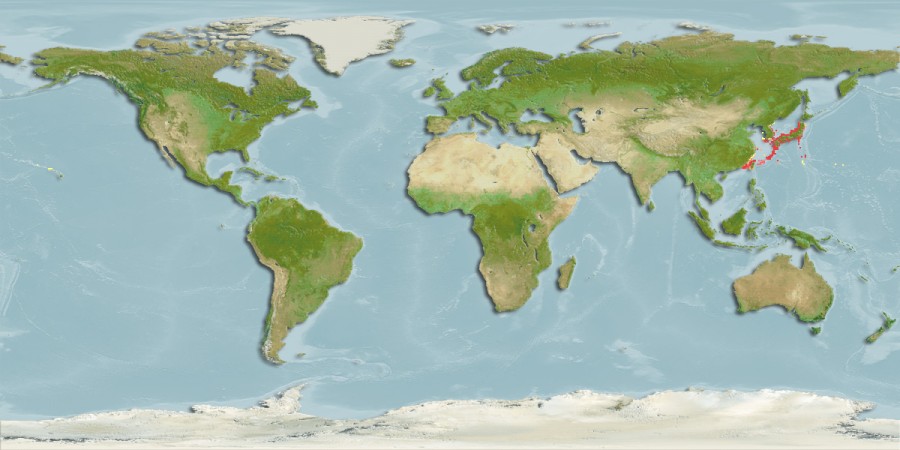
Range of O. fasciatus.  Note that there are no points between Japan/Asia and Washington, as the boat likely floated across the Northern Pacific. [Map: aquamaps.org]


The sheer probability of this is slightly amazing- in order for this to happen, the fish must have first been trapped inside the vessel, and survive months of stressful through storms, temperature variations, and jostling.  Unlike intertidal invertebrates, which are used to a stressful and changing environment, fish are much more delicate and likely to die from stress or abrupt changes in water characteristics.  The reason for this is a temperature-sensitivity factor called 'Q10' or temperature coefficient.

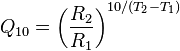
Q10 is the rate at which your metabolic rate increases with an increase in ambient temperature.  More specifically, for every temperature increase of 10 degrees celcius, your metabolic rate is multiplied.  Fish have a notoriously low Q10, meaning that a slight change in water temperature can actually double their metabolic rate.  A Q10 of '2' means that for every 10 degrees celcius, an animal's metabolic reaction rates double. A Q10 of '3' means that it would triple, and so on.
Q_{10}=\left( \frac{R_2}{R_1} \right )^{10/(T_2-T_1) }
The equation for Q10, or the temperature coefficient.
Here, R = rate of biochemical (enzyme) reactions within the body, both original (R1) and with the new temperature (R2)
and T = body temperature (generally in Celcius), both original (T1) and in new temperature (T2).

Most animals fall within a Q10 range of 2 or 3.  Also, keep in mind that most critters (such as you and me) can use 'homeostasis' or maintaining a particular body temperature to prevent abrupt changes.  Enzymatic activity in animals (the chemical reactions that keep your body going day to day) is very sensitive to temperature, and therefore it is essential that we keep our body temperatures in a relatively stable range from which it rarely changes- say 98.6.  That is why a fever of 102 degrees might be so dangerous for us.  Each species has a slightly different 'peak' temperature where their bodies operate best at.  We can slightly increase or decrease our metabolic rate (exercising, or sitting on the couch), but to a very minor degree without serious consequences.

Q10 reaction rate chart.  Read more at: http://www.calpoly.edu/~bio/EPL/pdfs/SampleLectureBIO162.pdf


Fish have a wide range of Q10 values, but as a result of being poikilothermic (having changing body temperature) unlike mammals, they are much more sensitive to temperature changes.  Think of how sad your goldfish looks if you change his water and make it a little too cold, or a little too warm- his metabolic rate is going crazy.


It is a wonder that these guys survived their entire voyage.  Unfortunately, of the five fish, only one is still alive- the others dying in transport and removal (likely from heat and handling stress once the boat washed up), showing how delicate they really are.  If the lone survivor continues to thrive, it will be placed on display at the Long Beach Aquarium.  I'm rooting for him.


If you'd like to learn more about temperature regulation in animals, there is an excellent introductory lecture at: http://www.calpoly.edu/~bio/EPL/pdfs/SampleLectureBIO162.pdf. 
Enjoy!